

La visión es uno de los cinco sentidos primarios que muchas personas dan por sentado. A veces, los problemas de salud pueden afectar la visión clara, y los pacientes necesitan pruebas precisas de los oftalmólogos.
Con un diagnóstico correcto, los pacientes pueden comprender mejor su condición médica. Esto puede ayudarles a recibir el tratamiento adecuado para mejorar su visión.
Una buena consulta de oftalmología puede proporcionar diagnósticos precisos utilizando el equipo adecuado. Esto incluye herramientas de pruebas visuales que detectan rápidamente problemas de visión. Encontrar el campímetro correcto es crucial.
¿Dirige una consulta oftalmológica? ¿Desea mejorar la experiencia de sus pacientes? ¿Le gustaría hacer más eficientes los exámenes de campo visual? Si es así, utilice esta guía completa para elegir el mejor campímetro para su práctica.
Comprensión de las pruebas del campo visual
Las pruebas de campo visual miden la visión periférica de un paciente y buscan áreas donde la vista podría haberse perdido.
Muchas pruebas de campo visual incluyen pruebas de perimetría cinética, de confrontación y estática automatizada. Cada tipo tiene su propósito.
Por ejemplo, el examen del campo visual por confrontación es un examen completo que no requiere equipo especial. El médico le pide al paciente que mire un objeto. Luego, el médico comprueba el campo de visión del paciente mostrando objetos o un cierto número de dedos.
Las pruebas de campo visual son comunes. Muchas personas se han hecho esta prueba al menos una vez en su vida. Puede ocurrir durante un examen general de los nervios craneales o en una cita con el oftalmólogo.
Es importante detectar los problemas de visión a tiempo. Esto puede conducir a un diagnóstico preciso, como glaucoma o un trastorno neurológico.
La buena noticia es que el equipo de prueba del campo visual mejora con el tiempo. Los dispositivos más nuevos proporcionan resultados más rápidos y precisos, y tienen interfaces más fáciles de usar, lo que conduce a mejores resultados para los pacientes.
Un instrumento oftálmico utilizado para la prueba del campo visual es un campímetro. Este equipo especial prueba y registra la visión periférica de un paciente. Cada consultorio de oftalmología debe tener al menos un buen campímetro. Esto es importante tanto para el personal como para los pacientes.

¿Qué es un perímetro?
En oftalmología, un perímetro es una herramienta para examinar el campo visual de un paciente y detectar cualquier problema, ya sea importante o menor.
Su función es encontrar cualquier punto ciego. Esto puede ayudar en el diagnóstico o en el seguimiento del progreso o deterioro de un paciente. Funciona haciendo que el paciente registre cuándo ve luces dentro de la máquina, lo que crea un mapa final de su visión.
Un perímetro es una herramienta importante para comprobar la salud ocular. Las consultas de optometría y de médicos generales lo utilizan. Aquí se enumeran algunas de las afecciones que puede diagnosticar:
- El glaucoma es una afección ocular común causada por demasiada acumulación de líquido. en el ojo. Esto causa un aumento de la presión y puede dañar el nervio óptico.
El glaucoma a menudo comienza lentamente, con una pérdida gradual de la visión. Sin embargo, eventualmente puede causar ceguera total en los pacientes. Aunque es más común en personas mayores, la afección puede afectar a personas de todas las edades. Un examen de perímetro puede detectar el glaucoma de forma excepcionalmente temprana, mejorando los resultados.
- Degeneración Macular La degeneración macular es un tipo común de pérdida de visión que afecta predominantemente a personas mayores de 50 años. El daño a la mácula causa visión central borrosa. Los pacientes pueden notar una mancha oscura en su visión. Esto puede hacer que las tareas cotidianas, como conducir o leer, sean más difíciles.
- Desprendimiento de retina El desprendimiento de retina es un problema ocular raro pero grave. Puede causar sombras oscuras, visión borrosa y muchas moscas volantes. Ocurre cuando la retina se retrae demasiado en el ojo y requiere cirugía. Los instrumentos de perímetro pueden ayudar a diagnosticar esta afección.
- Trastornos Neurológicos: Los perímetros pueden incluso ayudar a diagnosticar afecciones neurológicas. Algunas afecciones neurológicas pueden afectar la visión y dañar el nervio óptico. Una prueba de campo visual revela este daño.
- Atrofia del nervio óptico: La atrofia del nervio óptico es el daño al nervio óptico. Dependiendo de la causa, puede provocar la pérdida permanente de visión. Es muy grave, por lo que es importante diagnosticarla a tiempo con un buen equipo de campo visual, como los perímetros.
La Experiencia del Paciente
Afortunadamente, las pruebas de campo visual con perímetros son rápidas e indoloras para los pacientes. Por lo general, implican colocar un parche en un ojo y luego apoyar la barbilla en un punto de apoyo. El paciente mira hacia adelante en la máquina, presionando un botón cada vez que ve un destello de luz. Solo se necesitan de cinco a diez minutos por ojo, por lo que debería completarse en veinte minutos.
Los resultados serán excepcionalmente precisos si el paciente se mantiene concentrado durante el proceso. También deben registrar correctamente las luces intermitentes con el botón. Muchos perímetros pueden cambiar el ritmo para adaptarse al paciente. De esta manera, los pacientes que tienen dificultades pueden tener una experiencia más lenta.
Características clave a considerar al elegir un perímetro
El perímetro es crucial para diagnosticar muchas afecciones. Por lo tanto, es esencial elegir el adecuado para su práctica. Se deben tener en cuenta muchos factores a considerar, incluidas las siguientes características clave, al buscar un perímetro para su práctica.
- Precisión naturalmente encabezará tu lista de características. ¿Qué tan precisa necesitas que sea la prueba? Tendrás que considerarlo en relación con el alcance de la prueba: cuanto más amplio sea el perímetro de la prueba, menos precisos serán los resultados.
- Velocidad: ¿Está usted enfocado en aumentar la eficiencia en su clínica? Al buscar perímetros, considere la rapidez con la que llegan los resultados y cuánto tiempo toma la prueba en general. Si su objetivo principal es optimizar el proceso, un perímetro que se destaque por su velocidad sería el adecuado para usted.
- Pruebas de Capacidades: ¿Qué tipo de capacidades ofrece la prueba? ¿Busca pruebas de visión generales? ¿O necesita pruebas detalladas para el seguimiento de enfermedades neurológicas? Saber qué necesita probar es esencial, ya que dictará las capacidades que requiere de su perímetro.
- Costo: Naturalmente, necesitarás tener en cuenta el costo en tu compra de perímetro. Mira tu presupuesto y mira cuánto puedes usar para el instrumento. Recuerda considerar también los costos de mantenimiento, como calibración, reparaciones y reemplazo de piezas. Presupuesta para esto a futuro.
- Marca: En el mundo del equipamiento médico, la marca correcta importa. Quieres que tu equipo sea completamente seguro y preciso. Esto significa que podrías pagar un poco más por una marca en la que realmente confías. Si has usado una marca y te han gustado sus productos anteriormente, podrías querer buscar un perímetro de esa misma compañía.
- Comodidad del Paciente: Siempre considera la comodidad del paciente al comprar un perímetro. Si bien la prueba es relativamente rápida e indolora, quieres que tu paciente se sienta cómodo.
Esto les ayuda a tener una mejor experiencia, a relajarse y a seguir las instrucciones correctamente, lo que les permite proporcionar resultados precisos.
- Tamaño de la base de datos: Necesitas un perímetro para registrar datos de pacientes, pero ¿cuánto necesitas? El tamaño de la base de datos es importante aquí. Si diriges una clínica grande, necesitarás equipos que puedan almacenar una gran cantidad de datos dentro de la máquina a la vez.
- Longevidad Naturalmente, querrás que tu valla dure mucho tiempo. Reemplazarla puede ser costoso y llevar mucho tiempo.
Gastar un poco más en un perímetro más resistente puede ser beneficioso. Esta elección suele ser más rentable a largo plazo. También puedes investigar las garantías.
- Tamaño: Another important consideration is the perimeter’s size. How much space does your practice have? If you are a small practice, you won’t want to invest in a huge perimeter that occupies more space than necessary. Think about portability, too; some perimeters are easily portable, which is a bonus for some practices.
- Learning Curve: Are you ready to add a new area to your practice, even though learning will take time? Or would you rather get a perimeter that melds seamlessly into your practice’s already-established routine? A crucial consideration exists, as some perimeters are more challenging to get to grips with.
- User Interface: Each perimeter will have a different user interface. Choosing one that works well for you and your staff members is best – prioritizing ease of use is important here.
- Types of Perimeter: It’s worth noting that there are different types of perimeters, all with different functions. For example, there are both static and dynamic perimeters that provide different types of vision testing. We will explore the different types of perimeters in more detail below. This will help you make the best choice for your practice.
- Integration Capabilities: What type of equipment does your practice already use? When buying new medical equipment, avoid changing your whole system. Instead, find a visual field perimeter that works well with your current equipment.
All these factors are important when buying your Ophthalmic Perimeter. Considering them will help you choose the best perimeter for your practice.

Types of Perimeters and Their Applications
As mentioned above, you need to think about the different types of perimeters for your practice. Not every perimeter will help you reach your goals.
Manual Perimeters
As the name suggests, manual perimeters require manual intervention to work. They may not work as well as automated systems, but they can help patients who struggle with automated ones.
Automated Perimeters
Unlike manual perimeters, automated perimeters largely work on their own, requiring minimal interaction from the practitioner. Many people often view automated perimeters as better than the other option.
They deliver more sensitive results and can complete the process faster. Plus, they require less highly trained staff. Overall, automated perimeters offer more efficient vision field testing.
Static Perimeters
Static perimeters involve the stimulus – often flashing lights – appearing stationary. This means that when the lights appear in front of the patient, they will not move. Instead, they will flash in one spot and often stay longer.
Dynamic Perimeters
Dynamic perimeters involve moving a stimulus from one area to another. The doctor asks the patient to respond when they first see it. So, the light will appear just outside typical peripheral vision and move inwards. This can provide a more accurate look at the patient’s field of vision.
Each of these perimeters has its advantages – the one that’s best for you depends on your clinic and its goals.
Top-Rated Ophthalmic Perimeter on the Market
You now understand more about what to look out for when shopping for perimeters for your clinic. So, what types of Ophthalmic Perimeter are out there, and which are the best? These top-rated perimeters offer distinct advantages and could work well for your practice.
1. iCare Centervue Compass Fundus Automated Perimeter ($7,999.00)
iCare Brújula is advanced perimeter uses the latest technology. A compact machine scans with LED lights in a 30-degree radius. Thanks to this, the tests are highly reliable, providing much better patient outcomes.
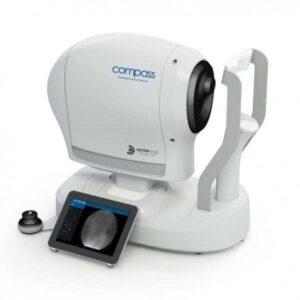
An automated perimeter runs efficiently, allowing clinics to streamline their testing. This product is easy to use, comfortable for the patient, and reliable.
2. TOPCON TEMPO Perimeter Visual Field Screening
The TOPCON TEMPO perimeter is great for practices that need speed. This machine works accurately and effectively at a much faster pace than many other perimeters. A compact, affordable model exists, making it great for small clinics that need portable equipment.
3. Kowa AP-7000 Automated Perimeter ($2,222.00)

El Kowa AP-7000 Automated Perimeter offers extremely accurate measurements and customizable features to diagnose various conditions. It is a complex tool that takes time to learn. It works best in practices that provide specialized care services.
4. Haag-Streit Octopus 600 Pro Computer Perimeter ($7,888.00)

For an easy-to-use perimeter that can detect early glaucoma, try the Octopus 600 Pro perimeter. This perimeter runs efficiently using EyeSuite software, providing plenty of informative data and insights after testing. Despite its advanced analyzing technologies, it’s refreshingly simple to understand and provides fast screenings. Remember that the price reflects the quality—you will be paying a steeper amount for this than others.
5. Zeiss Humphrey Field Analyzer 3
To stay up-to-date with advanced vision testing technologies, you cannot go wrong with the Zeiss Humphrey Field Analyzer 3. This high-quality perimeter provides accurate testing for glaucoma. It uses guided progression to help practitioners make better decisions for patients. The machine can consider the patient’s medical visual history, which gives more in-depth projections.
It’s a great piece of equipment for any ophthalmologist’s clinic. However, the price shows its high quality.
Tips for Implementing a New Perimeter in Your Practice
Have you found the perfect perimeter for your practice? This crucial first step is essential, but you still have more to do. Purchasing a high-quality perimeter is one thing, but using it to benefit your practice best is another. Here are some tips for implementing your brand-new perimeter into the practice.
Integrate with Your Current Equipment
Your current equipment is anything but obsolete now that you have your new piece of equipment. One of your first steps is to integrate your new perimeter with the systems you already have in place. For example, ensure the perimeter testing data works well with your other records.
Train All Staff
Whether the learning curve is small or large, you need to train all staff to use the new perimeter correctly. Spending more time training staff is better.
This way, you can be sure everyone understands how it works. Revisiting the system later is more difficult. Remember that some perimeters will have more advanced features, and you may wish for at least one staff member to understand these.

Find its Most Appropriate Placement
Where is the best place to keep your perimeter? Where will patients take the test?
Scope out the most appropriate placement within your practice. Even if you plan to use the perimeter portably, it should still have a main home. This way, all staff will know where to find it.
Get to Grips with the Maintenance Required
What kind of maintenance is necessary to keep the perimeter up and running? Your purchase will include all the information you need. Take time to understand it and create a schedule. This way, you won’t miss any maintenance.
Test it Out
Naturally, you will want to test the perimeter before using it on patients. You aim to ensure that all the features work effectively and you know how to use them properly. If there are any defects, contact the supplier.
Know What You Need from the Patient
It is important to remember that perimeters are only accurate when used correctly. Even the most sophisticated vision testing machines will only produce successful results if the patient follows the instructions. When you install a new perimeter in your practice, know what each patient needs and have clear instructions ready.
It helps to have a visual infographic for patients to see what they need to do. With perimeters, looking at a single location during the testing is essential.
Allow More Time in the Beginning
Your new perimeter will soon fit well with the practice, and the staff members will understand the machine completely.
However, that won’t be the case in the early days. Allow a little more time when using it with patients in the beginning. More efficient equipment will emerge once you fully understand how it works and its features.

Finding Ophthalmic Perimeter for Your Practice: Summary and Key Takeaways
Investing in the right equipment is key to running a successful clinic. This helps ensure efficiency and puts patients first.
The right perimeter is especially important as there are so many variations. You need to consider your clinic’s goals while also factoring in budget, purpose, size, and much more.
Here are the key takeaways to consider when finding the best perimeter:
- The type of perimeter (e.g. manual vs. automated)
- How big of a learning curve it comes with
- The price – including maintenance costs
- The testing capabilities it offers (such as glaucoma or neurological conditions)
- The size and whether (or not) it is portable
- How much data it can store within the machine at any one time
- How comfortable the device is for the patient
Considering the abovementioned points, you are more likely to invest in a good perimeter. This will help your practice run more smoothly and improve patient outcomes.
Are you still unsure which Ophthalmic Perimeter is right for you? At Ophthalmetry Optical, we sell exceptional medical equipment to suit your practice’s needs. We are the sources of the greatest ophthalmic instruments, so we will surely help you with your search.
For a perimeter with the latest vision testing features, consider the Centervue Compass Fundus Automated Perimeter. It is also budget-friendly.
You can buy an Ophthalmic Perimeter on our website. You will also find all the extra details you need. This will help you ensure it’s the right Ophthalmic Perimeter for your practice.

 English
 Spanish
 German
 French