
Optical Biometry Devices: The Latest technology for Cataract Surgery.
What are Cataracts?
Cataracts can be described as the clouding of the clear lens of the eyes. Thus, individuals with cataracts will experience cloudy vision, a condition that makes it difficult to read or drive. Cataracts develop slowly over time and do not initially affect an individual’s vision, but as they continue to grow, they will interfere with the person’s sight. In scientific terms, it can be referred to as the opacification of the crystalline lens, resulting in visual impairment.
What Causes Cataract Formation
Aging is the most common cause of cataract development; exposure to ultraviolet radiation can also lead to the formation of cataracts, and the consistent use of tobacco products. However, age is the most significant factor that contributes to the development of cataracts.
According to the Visual Impairment Project in Australia, it was discovered that the prevalence of cataracts increases after individuals turn 40. And by the time they reach 70, a good number will have developed cataracts, and when they reach the age of 90, all of them will be infected.
Which Was The Earliest Method Used To Treat Cataracts
In the past, cataracts were treated through a process called cataract couching, which was performed on mature cataracts. What you must, however, know is that the cataract was not removed from the eyes;instead, it was dislodged from the visual axis using a needle. Therefore, cataracts remained in the eyes, but they no longer blocked light and improved vision.
Reasons for Developments in the Methods of Treating Cataracts
 Although couching was considered a success, it still retained a cataractous lens, and the lack of aseptic technique made the effect harmful to the eyes. This resulted in temporary blindness after the procedure.
Couching is believed to have been used up until the 18th century. As early as 800 BC, an Indian surgeon is believed to have been the first person to perform extracapsular cataract extraction. The procedure was branded extracapsular simply because the lens was not removed. The year 1747 marked the day when a French surgeon did the first cataract extraction.
His procedure turned out to be far more effective than the traditional couching method. The procedure involved making a sizeable corneal incision measuring more than 10mm. The lens capsule was punctured, allowing the nucleus to be expressed; he then extracted the lens cortex through curettage. The extracapsular process showed significant progress compared to couching; however, it wawasn’tree from postoperative complications, including retained lens remnants, poor wound healing, infection, and posterior capsular opacification.
The method was used for over 100 years until the 19th century when Intracapsular Cataract Extraction was introduced. And with further studies, better tools (surgical) and methods of extracting cataracts were developed, making the extracapsular cataract extraction method the better method, rendering the Intracapsular cataract extraction method redundant.
Over time, however, the Intracapsular cataract extraction method was also rendered redundant because of the high rates of blinding complications. It is important to note that modern-day versions of extracapsular extraction and manual small-incision cataract surgery have been adopted in many parts of the world.
What Is Optical Biometry In Ophthalmology?
Optical Biometry is a non-invasive automated procedure used in ophthalmology to determine the anatomical characteristics of the eye.
What is Biometry for Cataract Surgery?
According to medical literature, the latest technology for cataract surgery is optical biometry devices, a procedure that has proved to be a highly accurate and non-invasive automated method for measuring the anatomical characteristics of the eye. The importance of accurate measurements is to help determine the IOIOL’sorrect power before it is implanted during cataract surgery.
WhWhat’sore, ophthalmic Biometry is easy to perform and highly comfortable for the patients. Notably, before implantation takes place, the specialists must first ascertain the correct power lens. And the method for determining the anatomical characteristics of the eye necessary for IOL power calculation is known as Ocular Biometry.
Ocular Biometry evaluates the axial length, anterior chamber depth, and Keratometry. Ocular Biometry also includes the anterior segment biometry, which only measures the front third of the eye. Biometric measurements are crucial when selecting the correct IOL power and achieving the desired refractive outcome after cataract surgery.
What Tests Do You Need Before Cataract Surgery?

There are a couple of routine pre-operative tests performed before conducting a cataract surgery; for starters, your doctor will review your medical history and symptoms and proceed to perform an eye examination. Other tests that will be conducted are as
- The Visual Acuity Test – The visual acuity test utilizes an eye chart. And it measures how well a person can read a series of letters. The eyes will be tested one at a time, with one eye covered. And with a chart or a viewing device and progressively small letters, the doctor will determine if the patient has 20/20 vision or if the vision shows signs of impairment.
- The Slit Lamp Examination is a procedure that allows the doctor to view the structures at the front part of the eye under magnification. The slit lamp uses an intense line of light, a slit that will help illuminate the inindividual’sornea, lens, iris, and the spaces between the Iris and the Cornea.
- A retina examination involves the doctor placing drops in the papatient’syes to dilate the pupils, making it easier to examine the back of the retina. The doctor could also use the Ophthalmoscope to examine the lens for possible signs of cataracts.
- Applanation Tonometry- is designed to measure fluid pressure in the papatient’syes, notable is that there are a couple of different devices that can be used to do this.
It is important to note that the American Academy of Ophthalmology does not recommend routine medical tests to be performed before cataract surgery. The tests can, however, be carried out about the findings on a papatient’sistory or physical examination. Also, the American heart association discourages routine testing in asymptomatic patients who are about to undergo low-risk procedures such as cataract surgery.
Cataract Surgery Equipment
Just as the methods of performing Cataract surgery have evolved over the years, so have the equipment used to carry out the surgeries. Currently, the latest equipment used in Cataract surgery is the Trifocal lens which improves the papatient’sision at greater distances. Other Cataract Surgery equipment includes 12 tissue forceps, which hold delicate tissue, such as the scleral flap. We also have the Utrata Capsulorhexis Forceps, which are used together with the phaco chopper to rotate the nucleus halves.
The McPherson Angled Tying Forceps enable an automatic way of holding, stitching, and retracting tissue when performing a Cataract surgery.
What is the impact of Cataract surgery on the quality of life?

Cataract surgery has been established to improve vision-specific functioning. However, the impact of Cataract surgery on overall health is not yet clear due to the limited availability of vision-related data. According to Ophthalmology literature, Cataract surgery improves visual functioning in individuals with comorbid eye disease, especially in its early stages.
Also, individuals who have undergone the second eye Cataract surgery have improved visual ability compared to the first eye surgery. In recent developments, there has been a significant shift toward second-generation Cataract surgery, which has shown substantial improvements in visual functioning. WhWhat’sore, is that the measurement precision has also been improved more so when compared to the types of equipment used in the first generation.
What Is the Content and Cost of Cataract Surgery?
It is almost impossible to estimate the cost and cost-effectiveness of cataract surgery procedures simply because there may be other recurring costs that cannot be generalized. Therefore there are a couple of methods by which the relevant personnel can estimate the cost of cataract surgeries. Overall, however, the below information will be required when calculating the cost of Cataract surgery.
- The ophthalmic process used in cataract surgery contributes to the overall cost of the procedure, but modern methods, such as phacoemulsification or small incision surgery, can reduce this cost.
- Secondly, the cost of consumables must be determined, including items such as syringes, dye, gloves, the intraocular lens, scrubbing liquids, and balanced salt solution, among others.
- The cost of the operation theater procedures must also be determined, including maintenance, electricity, manpower, salaries, and the cost of the building.
- Costs will also accrue because of the time spent by surgeons and the average time required to spend on surgery. The above will be estimated in either a public or a private setting.
What are the complications of Cataract Surgery?
Some complications can arise after cataract surgery; fortunately, most of these can be effectively treated. It is important to note that the risk of an individual developing a complication increases if they have another eye disease or a pre-existing severe medical condition.
Individuals with Cataracts must also be aware that their vision may not improve if they have underlying eye damage from other conditions, such as macular degeneration and glaucoma. Thus, as a general rule, individuals are advised to address their pre-existing eye conditions before considering cataract surgery.
Here are some of the risks that accompany Cataract surgeries;
- Swelling
- Bleeding
- Glaucoma
- Loss of vision
- Inflammation
- Swelling
- Secondary cataract
- Retinal detachment
- Individuals may also experience drooping eyelids.
At What Stage Should Cataracts Be Removed
The realization that one has Cataracts can cause panic, but that does not mean that they should be removed immediately. Additionally, many people with cataracts do not experience blurred vision. Thus, individuals who have Cataracts but can remain productive should not have their Cataracts removed. However, individuals who have Cataracts and experience blurred vision when reading or driving should consider having their Cataracts removed.
Comparative Prices of Optical Biometry Devices for Biometric Calculations of the Eye
Here are Optical Biometry Devices and Cataract Surgery Equipment for Eye Care.
1. Alcon Constellation ($11,999.00)

The CONSTELLATION Vision System is a microsurgical unit for cataract and eye surgery. Manufactured by American Swiss company Alcon, it is an innovative product in the world of vitreoretinal purposes.
The CONSTELLATION has a ton of features and functions.
New ULTRAVIT high-speed probe
The CONSTELLATION comes with the brand new ULTRAVIT high-speed probe. This feature allows cutting rates of up to 5000 CPM (cuts per minute). It gives surgeons an advantage for precise operations in vitrectomy procedures.
Duty Cycle operation
The CONSTELLATION also features a duty cycle control in a commercial-grade vitrectomy device for the first time. This allows surgeons to use different duty cycles for smooth vitrectomy procedures.
PUREPOINT laser
The CONSTELLATION has a fully integrated PUREPOINT® laser for optimal operation. This 532-nanometer laser allows surgeons better control and precision during surgical procedures.
Improved illumination system
The CONSTELLATION Vision System features improved illumination from its predecessors. This advanced Xenon illuminator is particularly useful for tissue visualization. And it provides more prolonged and higher brightness lighting during such procedures.
Intraocular pressure control
Another standout feature of CONSTELLATION is the Intraocular pressure (IOP) control. This allows users to maintain the infusion pressure within a range of 2 mmHg. Thus, it results in a more stable intraocular pressure.
Fully customizable
The table top is the primary user interface. Therefore, it operates as a standalone unit and controls the add-on accessories. The accessories or customizations include the Laser Module, Base, Auxiliary Illuminator, and Tray Arm Assembly.
Additional highlights
- Interactive 17-inch display
- Data card slot with 2GB memory card support
- Two connector columns for pneumatic probes and electrical handpieces
- Fluidics module for easy insertion of cassettes
- Supports two types of Doctor Protection Filters when using the laser: Tethered and Non-tethered
- Barcode scanner
- Limited one-year warranty (three years for the laser module)
2. Alcon Centurion ($17,777.00)

The CENTURION is a phacoemulsification unit for use in vitrectomy procedures. Packed with the latest technology and design, it is another landmark achievement for Alcon. This CENTURION surpasses their previous product line from versatility to ease of use.
What are the main features of the Alcon CENTURION?
The CENTURION packs many features useful in cataract lens extraction and anterior vitrectomy. Here are its main features and highlights.
Active Fluidics Technology
The CENTURION offers the latest Active Fluidics Technology for stable procedures. This tech is more advanced and performs better than a gravity-based Fluidics system.
Balanced Energy Technology
The Balanced Energy Technology of the CENTURION offers an elegant and smooth performance. Surgeons can carry out phacoemulsification procedures efficiently with more control. The OZil phaco and INTREPID Balanced Tip make this possible.
Applied Integration
Another highlight of CENTURION is its versatility in integrating with other technologies. This ununit’snnovative design helps it blend well with other units for multiple configurations.
New Phaco technology
To add to its safety and consistency, Alcon introduced the INTREPID Hybrid Tip and ACTIVE SENTRY Handpiece in 2019. These new products represent an upgrade from the existing OZil Phaco and INTREPID Balanced Tip.
AutoSert IOL
The AutoSert IOL Delivery System in the CENTURION is another feature essential during cataract procedures. This injector allows smooth and consistent delivery of IOL. This occurs at predetermined speeds for single-hand insertions.
Innovative software
The software settings on the CENTURION also provide surgeons with a wide array of options. You can set the vacuum control, aspiration rate, etc., for flexible control and removal of cataracts.
Additional highlights
- Large LCD touchscreen display
- Ergonomic design
- Wireless footswitch
- Motorized I/V pole
- Adjustable tray
- Storage drawer
- Rotating work surface
3. Bausch and Lomb Stellaris ($4,535.00)

Are you seeking an established technology that consistently impresses? With Bausch and Lomb Stellaris, you are guaranteed the ultimate visibility powered with optimum precision. Why? Because Stellaris is highly versatile, it is advanced yet straightforward in performance.
Many ophthalmologists who work on both the anterior and posterior parts of the eye find it challenging to obtain a device that suits their needs. This is where something as innovative as a Bausch and Lomb Stellaris comes into play.
Why choose Stellaris?
The Stellaris by Bausch and Lomb is an innovative machine that works wonders. It makes microincision cataract surgery significantly easier due to its advanced technology.
The Stellaris provides flow and vacuum fecal performance with a single aspiration system. Moreover, it balances fluid inflow by continually monitoring changes in a vacuum and adjusting its aspiration to prevent post-occlusion surges. The machine helps preserve chamber stability throughout the surgical procedure.
Considering all the positives of the Bausch and Lomb Stellaris, it should now be noticeable how the machine works differently than other kinds of the same. Eye cataract surgeries have and will undergo a new wave of advancements in overall functionality.
4. Heidelberg Anterion ($39,999.00)

Heidelberg Anterion is a relatively new addition to Heidelberg EnEngineering’sine of eye surgical devices. It is a device developed to examine the anterior segment of the eye in surgical procedures.
Heidelberg Anterion is a one-in-all device that combines corneal topography and tomography, axial length measurement, intraocular power calculation, and anterior segment metrics.
Key benefits of the Heidelberg Anterion
- The device provides high-resolution images for all biometric measurements.
- It can provide you with still images featuring the required color and description in high quality.
- The device is also easily upgradable for an efficient workflow.
- It achieves high-speed acquisition performance while minimizing the procedure time.
- It can achieve ray tracing with minimal errors using just one setting.
5. Zeiss IOL Master 700 ($12,999.00)

The IOLMaster 700 is a leading technological product in innovation and design within the realm of optical biometry devices.
The product manufacturer has also affirmed that the IOLMaster 700 can probe almost 99% of the cataract within the eye. This means that, for the first time, the surgeon or medical examiner can see and observe what they are measuring. Additionally, the powerful Optical Coherence Tomography (OCT) technology enables the visualization of the fovea, cornea, and lens without hindrance.
6. Keeler Accutome A-Scan Plus Connect ($2,390.00)

Accutome A-Scan or A-Scan Plus Connect is a revolutionary ophthalmic device from Keeler-Accutome. ItIt’s piece of equipment designed to meet the requirements of modern refractive cataract surgery. With the latest features incorporated into the machine, itit’sne of the foremost products on the market.
Professionals in the ophthalmology field can use the machine easily by following simple instructions. It can also conduct multiple tasks without glitches. WhWhat’sore, you dodon’taste much time performing the tasks.
Primary Functions of Accutome A-Scan
The equipment is an ideal solution for doing several tasks. They include
- Measuring and calculating all kinds of eyes
- Refining prpractitioners’urgical outcomes
- It performs well with thick cataracts
- It also works great with patients who have fixation difficulties.
7. Nidek AL-Scan ($4,825.00)

NIDEK designed and manufactured with precision, clinical competence, and ergonomic features. It enables uncomplicated measurement of six clinical parameters: corneal curvature radius, central corneal thickness, axial length, white-to-white distance, anterior chamber depth, and pupil size.
Using the NIDEK AL-Scan, these foundational elements, crucial for successful cataract surgery, can be executed in 10 seconds.
These are then extended out into the cornea, making the anterior segment visible to the one operating the machine.
- The sectional lens image helps assess the severe condition of the cataract.
- The pupil image helps assess multifocal Intraocular Lens (IOL) when scanning patients with myopia.
- The reflected image of the double rings helps detect anomalies on the corneal surface.
8. Lenstar Myopia ($7,900.00)
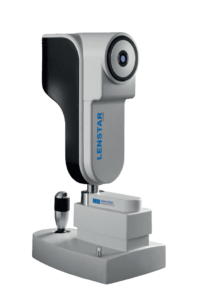
Lenstar Myopia comprises the Lenstar 900 optical biometer, developed by Haag-Streit, and the corresponding EyeSuite software as an extension. This device detects early myopia in patients to help make their daily life easier.
Features of Lenstar Myopia that make it easier to work within the optical industry.
Comprehensive Myopia Management
EyeSuite is a highly customizable and user-friendly software. However, it is also a comprehensive tool for managing myopia. Together with the Lenstar LS 900, it is used to determine the early onset of myopia, its effects, and its consequences in patients.
Refraction Determination
By early determination of refraction in children, experts can predict the progression of myopia into their adult age. The EyeSuite software analyses this data with the predicted course with various treatment methods.
Axial Length Measurement
The measurement of the axial length is very important in the case of myopia. It is an excellent indicator of myopic progression as it is independent of the papatient’state of mind or willingness to cooperate in the procedure.
Determining Environmental Factors:
Lensar Myopia provides a definition of these environmental factors and their impact on myopia progression. It analyzes these impacts based on recent research findings and visualizes their changes over time.
Graphic Visualisations
A significant advantage of Lenstar Myopia is its graphical visualization of patient data. Graphic visualization of refractive or biometric data is used to determine a suitable treatment procedure for myopic patients.
Informed Reports
The Lenstar Myopia software generates a highly informative report that combines visual curves and other relevant data. This report allows patients to understand their reports and actively participate in their treatment quickly.
Accurate Biometry
Lenstar Myopia consists of the Lenstar LS 900 biometer. It is a well-established optical biometer that gives an accurate measurement of the axial length and keratometry, and other structures.
9. Lenstar LS 900 ($6,900.00)

Lenstar LS 900 is an optical biometer that accurately captures all dimensions of the human eye. It is primarily used in cases of IOL (Intraocular Lens) surgery, where the eyeye’satural lens needs to be replaced with an artificial one.
Lenstar LS 900 gathers seven different types of measurements through a single scan. Some of them are:
- Lens Thickness
- Pupillometry
- Axial Length
- White to White
- Keratometry
- Anterior Chamber Depth
- Pachymetry
Lenstar LS 900 software is the latest technology and is very easy to use on all patients. Compared with competitors whose software remains outdated even after upgrading, this device is easier to operate.
10. Alcon Argos Biometer ($18,555.00)

Argos biometer is an optical biometer designed to deliver precision in optical procedures. It is a contactless and non-invasive clinical biometer. It uses SS-OCT (Swept-Source Optical Coherence Tomography), the first biometer in the world to use this technology.
The Argos Biometer is used before IOL surgeries to determine the dimensions of a peperson’sptical lens. It provides accurate information even about the cloudiest cataracts. It delivers precise and rapid measurements of nine parameters that are considered during IOL selection.
Multiple parameters in one scan
The Argos biometer can cover the measurements of multiple structures in one scan; some of which are:
- Toric Axis.
- Lens Thickness
- Pupil size
- Central Corneal Thickness
- K values
- Axial Length (AL)
- Anterior Chamber Depth (ACD)
11. Ziemer Galilei G6 ( $15,555.00 )

Galilei G6 is an advanced optical biometer used by optical surgeons for precision in optical procedures. It is also called a corneal topographer. It is a device that can be used for both cataract patients and those requiring refractive surgery.
Features of Galilei G6
In the context of making opophthalmologists’ork more accessible, here are a few features of this optical biometry devices device that make it so preferable:
- All-in-one Solution
The Galilei G6 device is the only device to combine Placido Disk Topography, Scheimpflug tomography, and Optical Biometry.
- Superior IOL Calculation
The Galilei G6 provides a dataset for IOL calculation and lens selection. With dual-Scheimpflug imaging, Placido, and lens measurement, the lens selection process for this device is more straightforward.
12. Sonomed Vupad ($9,999.00)

Sonomed VuPad is the first and only tablet-based eye definition ultrasound device manufactured by Sonomed. It configures A-scan, B-scan, UBM probes, and pachymetry for ophthalmic ultrasound procedures.
The device comes in two types: wall-mounted and desk clamp, making it even more convenient. This is one unique feature of the VuPad, as most other devices come in only one variant.
The VuPad is designed to produce superior image quality with high reliability. Its ophthalmic ultrasound performance is one to be impressed by.
Why choose Sonomed VuPad?
If you choose the Sonomed VuPad to accompany your surgical procedures, you will receive multiple benefits from a single, easy-to-use, and compact device. With its unsurpassed image quality, you will receive precise details for accuracy.
The available preset scan modes provide effortless optimization, along with a multi-touch screen option for efficient results. This device is what the future of ophthalmology will need.
Overall, the Sonomed VuPad provides an intuitive user interface, ensuring great success in ophthalmic ultrasound. Its simplicity in design and interface is what makes this device so worthwhile.
Conclusion
For as much as there are stages when Cataracts should be removed, we cannot ignore that the longer a Cataract grows, the harder it becomes. In this case, an advanced Cataract might prove challenging to remove. Cataracts should not be allowed to develop for extended periods because they can cause inflammation or Glaucoma. Improve Patient Outcomes—Explore Myopia & Dry Eye Devices
 English
 Spanish
 German
 French